
What Does ATS Stand For? Applicant Tracking System, Defined
What does ATS stand for? Applicant Tracking System: the software employers use to post jobs, collect applications, and track candidates.
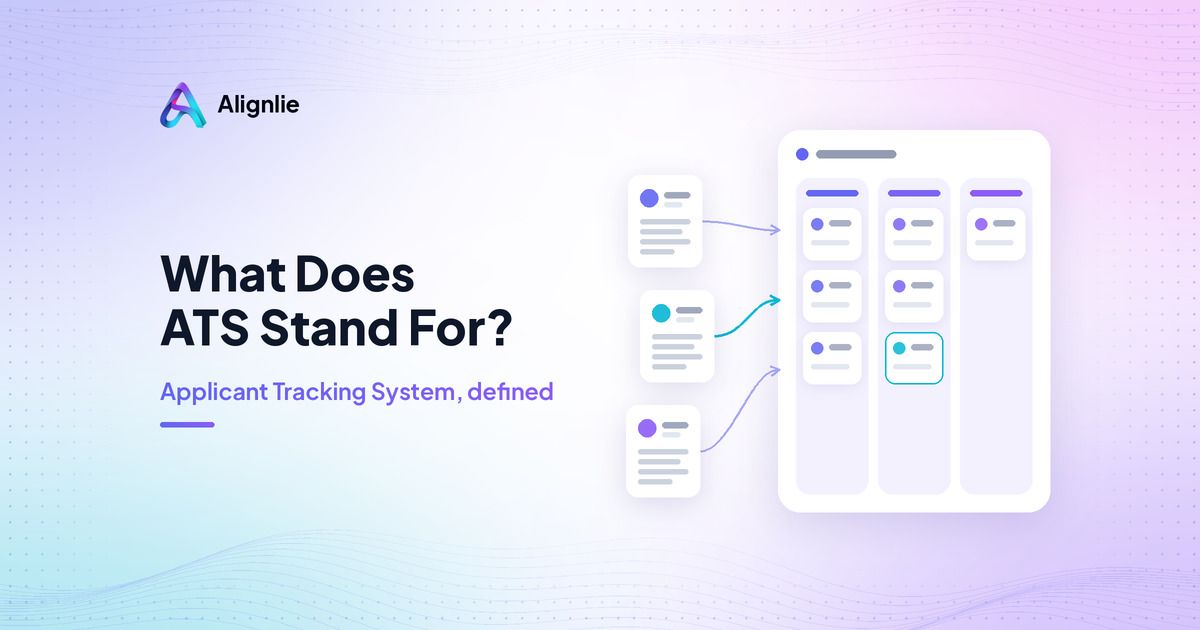
ATS stands for Applicant Tracking System. If you have been asking what does ATS stand for, that expansion is the short answer. The rest of this page explains what employers use that software for, and where to go next if you need the reading mechanics.
What does ATS stand for? Each letter, plainly
A is for applicant, T is for tracking, and S is for system. The ATS acronym names software employers use to handle recruitment electronically: posting roles, collecting applications, and keeping candidate records in one place. Encyclopedic and definitional references such as Wikipedia’s applicant tracking system entry and TechTarget’s ATS definition expand the letters the same way.
In plain language, it is a shared database and workflow for hiring — not a single public website, and not the same thing as your personal job-board account. This page stays at that definition. It does not walk through vendor history, platform comparisons, or market share.
Applicant tracking system meaning: what employers use it for
Applicant tracking system meaning, on the employer side, is practical. Per Greenhouse’s ATS glossary and TechTarget’s definition, employers typically use the system to:
Post jobs and receive applications in one workflow.
Store candidate records so the hiring team can find them later.
Move people through hiring stages (screen, interview, offer).
Collaborate inside the hiring team on the same application record.
Those are employer purposes drawn from definitional pages, not from a product tour. Greenhouse’s glossary is useful here as an employer-side description; skip any product pitch that follows the definition on a vendor site. TechTarget’s definition likewise stays useful only for the functional meaning. This page does not import a vendor list or applicant “hacks.”
Different employers run different products under the same acronym. The letters still mean the same class of software. You do not need a brand name to understand the expansion.
What does ATS mean for you as an applicant?
For a job seeker, what does ATS mean is usually this: when you apply online, your application becomes a record inside the employer’s system. The hiring team works from that record rather than from a pile of paper.
That is why the acronym shows up in job advice. Seeing “ATS” in a tip usually means “your application lands in the employer’s hiring software,” not “a mysterious filter you must trick.” It does not tell you how often a system rejects a file, and this page will not invent figures for how many employers use one.
It also does not hand you a formatting checklist, a template gallery, or a plan to “beat” the system. Those topics live elsewhere. Here the goal is only to know what the letters mean and what the software is for.
How an ATS reads your resume is a separate question
How the software extracts text, maps fields, and lets a recruiter search is a different topic. Read how an ATS reads a resume for that path. This page does not re-explain parsing.
FAQ
What is an ATS in hiring?
What is an ATS in hiring? It is the applicant tracking system employers use to collect applications and manage candidates through their hiring stages. TechTarget and Greenhouse both describe that employer-side role. One short definition is enough for this page.
Does every online application go into an ATS?
Many online applications do, especially at larger employers, but this page will not claim a universal rule or invent coverage figures. If you applied through an employer’s careers site and received a confirmation in that employer’s system, you are usually inside their tracking workflow. The acronym still means the same thing either way.
Conclusion
ATS stands for Applicant Tracking System: employer software for posting jobs, collecting applications, storing records, and moving candidates through stages. For how that software reads a resume file, use the separate parsing guide linked above.
Recent posts




Put this guide to work on a real job.
Paste a job description, add your resume, and see what’s covered before you rewrite.